Technical meeting on educational networks was held at the IAEA in Vienna, Austria, from December 8 to 12, 2025, dedicated to cooperation and exchange of information on best practices in the field of nuclear education. The meeting brought together more than 120 participants from 60 countries representing universities and organizations that train specialists in various fields of nuclear technology.
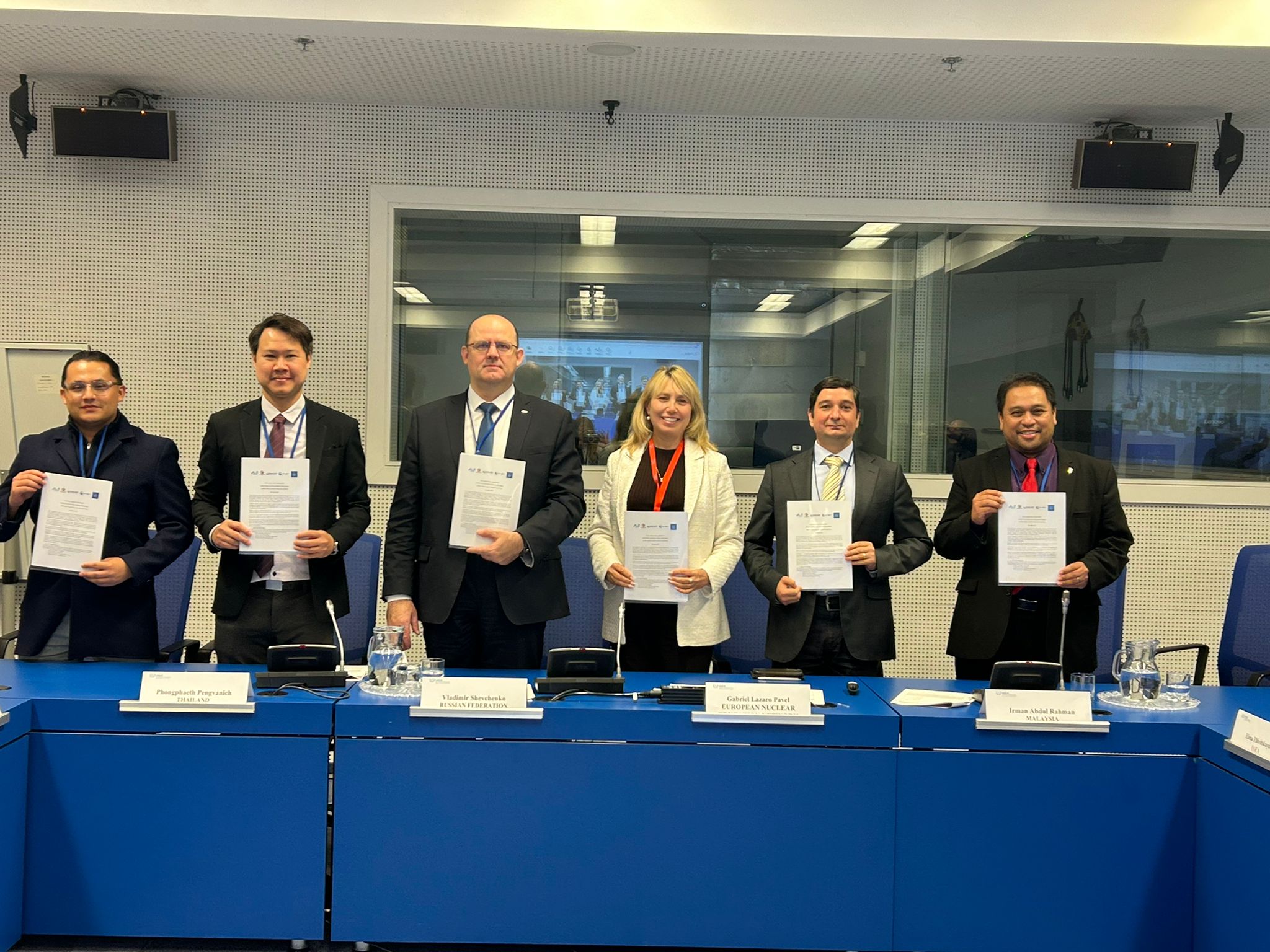
On December 9, 2025, on the sidelines of the meeting, a collaboration agreement was signed between international nuclear education networks: the Asian Network for Education in Nuclear Technology (ANENT), the Latin-American Network for Education in Nuclear Technology (LANENT), the Regional Network for Education and Training in Nuclear Technology (STAR-NET), the European Nuclear Education Network Association (ENEN) and the International Nuclear Science and Technology Academy (INSTA).
The signed agreement will make it possible to take full advantage of joint work, exchange of best practices, resources and opportunities for capacity building and effective nuclear education. The collaboration of educational networks promotes the dissemination, management and preservation of nuclear knowledge and helps ensure the availability of talented and qualified human resources for the safe and sustainable use of nuclear technologies.
On behalf of the STAR-NET network, the agreement was signed by Vladimir Shevchenko, Rector of the National Research Nuclear University MEPhI and President of STAR-NET, who on the first day of the meeting made a presentation on the role and experience of MEPhI in training specialists for the nuclear industry in Russia and abroad. He noted that the National Research Nuclear University MEPhI is the parent university of the Association of Higher Education Institutions “Consortium of Flagship Universities of the State Atomic Energy Corporation Rosatom”, uniting 18 universities in Russia. One of the main tasks of the association is to promote the practical implementation of educational integration programs with scientific and innovation-oriented industrial activities, and the development of fundamental and applied scientific research at universities. To achieve this goal, industry enterprises provide access to Rosatom’s infrastructure, conduct internships for undergraduate, graduate and young scientists, and assist in improving the skills of university staff through participation in joint research projects to address global challenges in the nuclear industry. Vladimir Shevchenko informed the participants about the establishment of the International Scientific and Educational Center for Nuclear and Related Technologies “Obninsk.Tech” and expressed confidence that universities of international nuclear education networks will take an active part in its implementation.